


> Home > What to visit > Churches and Monasteries

Collegiata dei Santi Quirico e Giulitta San Quirico d'Orcia
CHURCHES AND MONASTERIES
PHONE NUMBERS AND TIMES
Collegiata dei Santi Quirico e Giulitta
Business card (vCard)
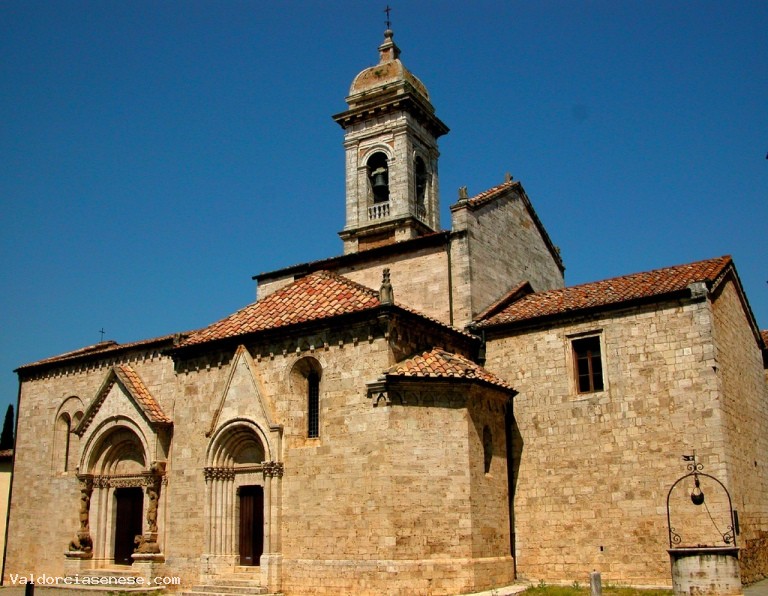
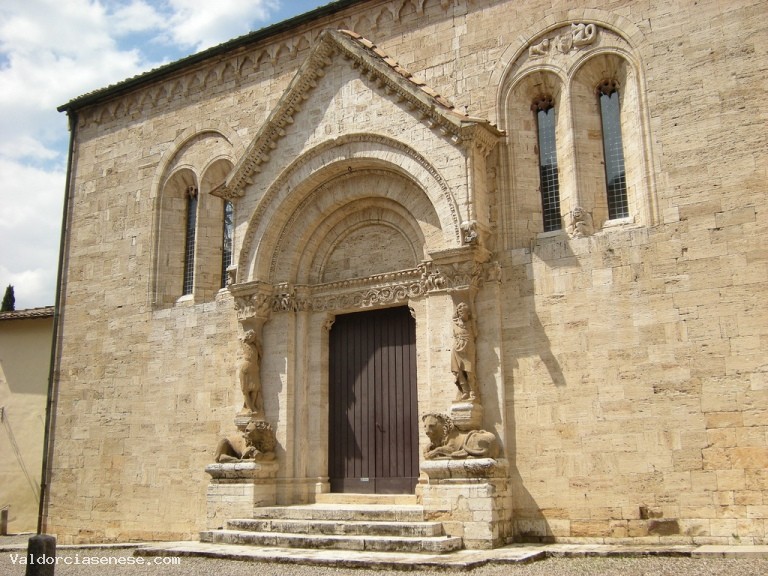
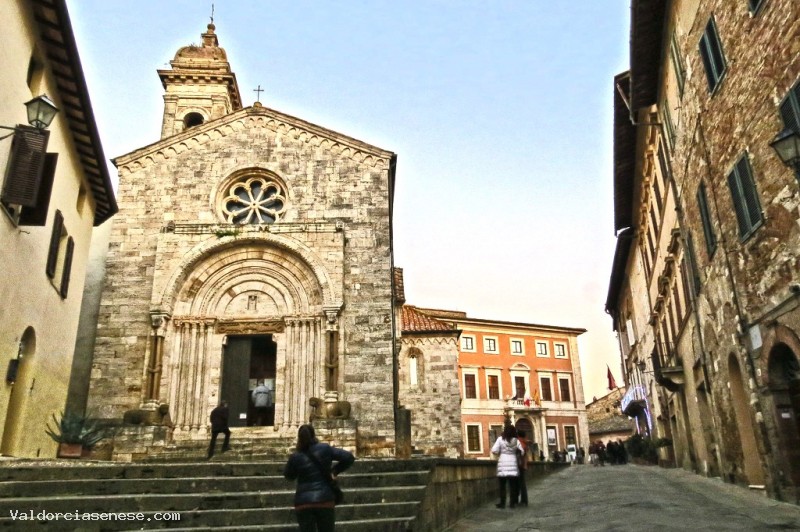
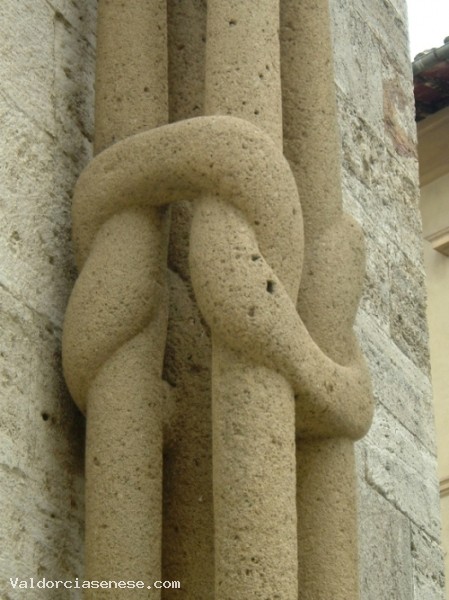
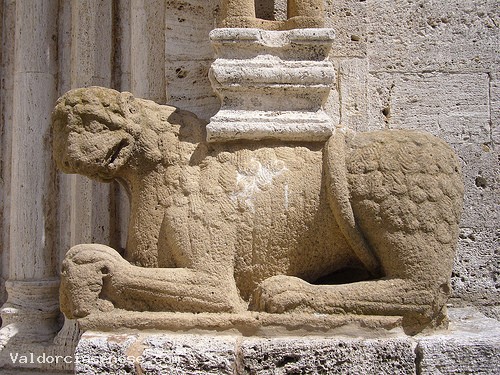
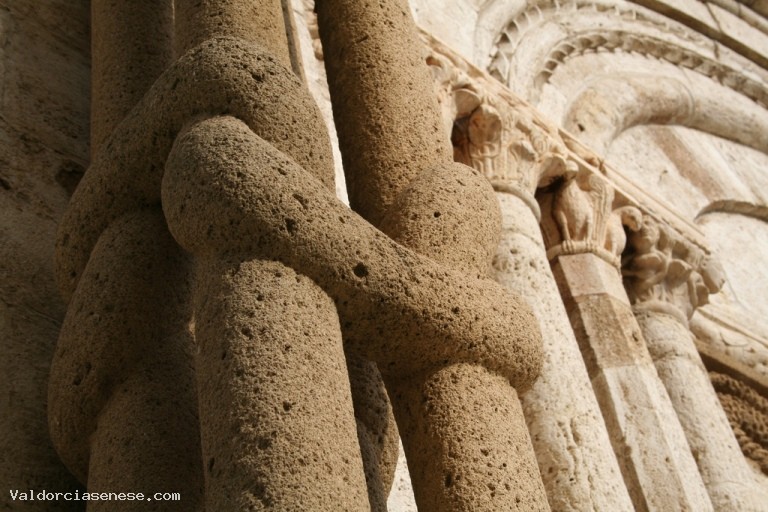
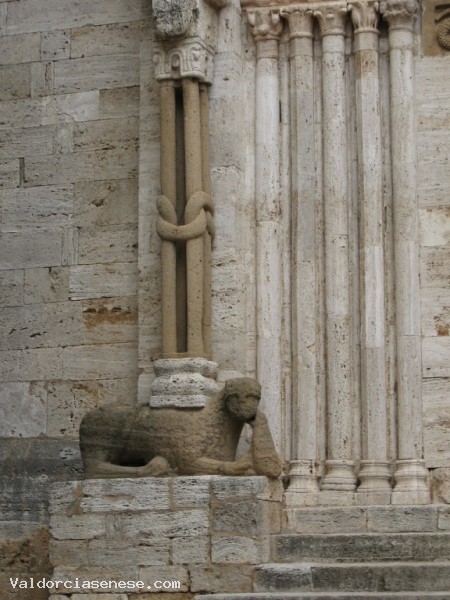
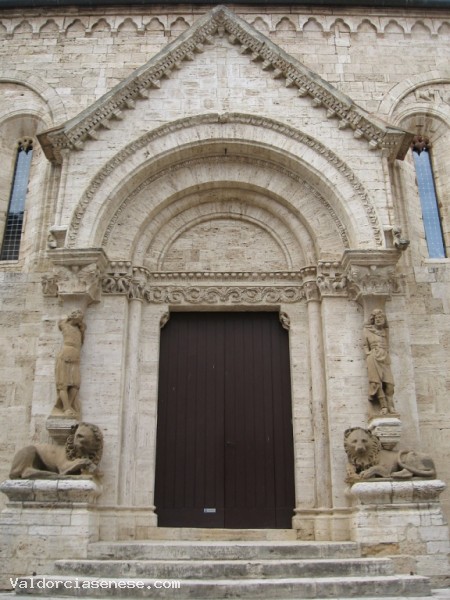
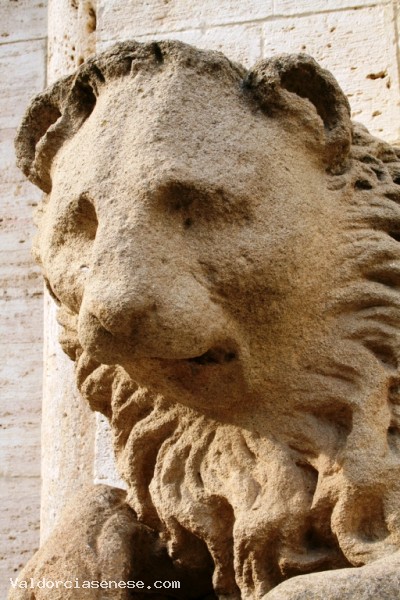
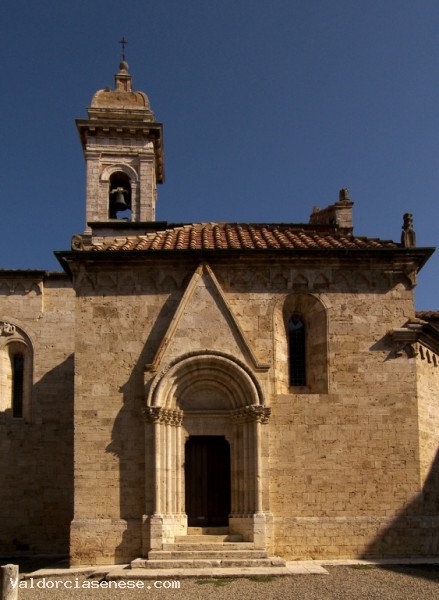
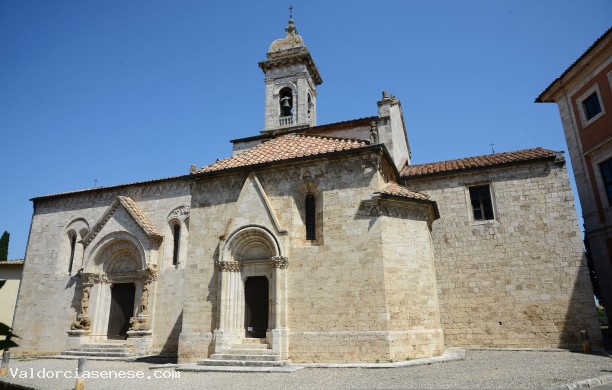
It is the most important monument in the village, located in the small triangular square near Palazzo Chigi. An ancient parish church preceded by an 8th-century baptistery, it is dedicated to the Saints whose feast day is celebrated on June 16th. The current structure was built towards the end of the 12th century; the oldest part appears to correspond to the façade, and in particular the main portal. The apse was demolished in 1653 to build the choir. It has a Latin cross plan with a single nave and apsidal chapels. The main portal, in Lombard style, is the most significant of the three existing ones, consisting of a slightly raised, round-arched porch, decorated and supported by two pairs of sandstone columns on each side, knotted at the center and resting on column-bearing lions. On the portal's architrave are two facing crocodiles. In the center of the lunette, a high-relief sculpted enthroned figure is believed to be the effigy of Saint Damasus, but is actually a representation of Saint Quirico. The portal's decoration follows a symbolic Christian iconography derived from Lombard art.
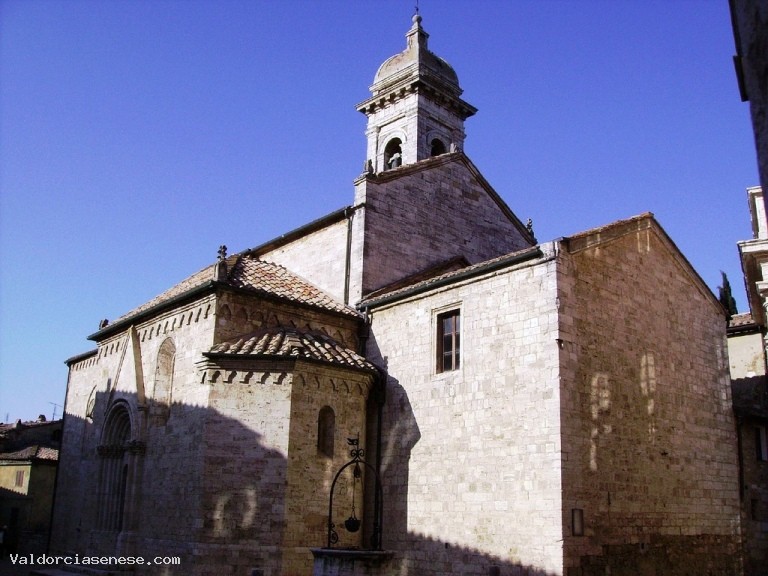
In the second half of the 13th century, expansion work was undertaken, adding the transept and two side portals along the Via Francigena. The first of the side portals, built in 1288, has been attributed to Giovanni Pisano, who at the time (1287-1288) was busy in Siena building the Cathedral. On the portal's cusp is the inscription Iohes in Gothic characters, interpreted as Pisano's name or perhaps as a reminder of the ancient title of the parish church dedicated to Saint Quirico and Saint John the Baptist. The portal on the same side of the transept wall dates back to 1298, the work of parish priest Lotto (according to the inscription on the architrave), who was likely responsible for the transept itself. The portal offers a combination of Gothic and Romanesque elements. In 1644, the parish church became a collegiate church. Between 1724 and 1733, Cardinal Anton Felice Zondadari had a new bell tower built, demolishing the old one. The interior of the church was also remodeled in Baroque style.
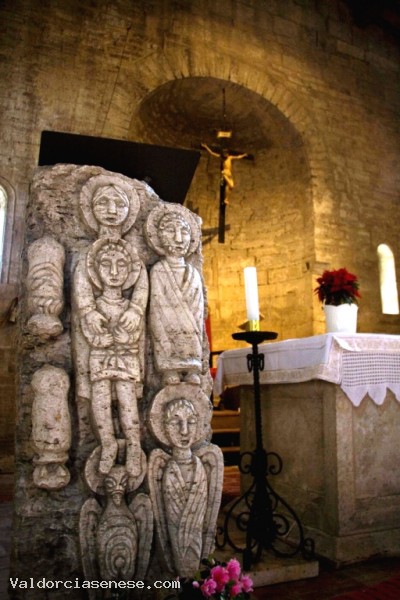
In 1749, the choir seats were restored. They had been created by the Sienese artist Antonio Barili for the Chapel of San Giovanni Battista in Siena Cathedral, later abandoned and purchased by the Marquis Chigi in 1644. Only seven of the nineteen panels created by Barili remain; the others, with the exception of the artist's self-portrait, which was later transported to Vienna, have been lost. A new bell tower was built between 1798 and 1806. In 1878, a stucco pulpit was created, later moved to the Church of the Madonna di Vitaleta. Subsequent modifications to the church were made during the restoration work after World Wa II.
Description of artworks:
- Madonna and Child with Saints John the Baptist, Quiricus, Fortunatus, and John the Evangelist - SANO DI PIETRO
- Madonna of the Rosary Saving a Girl from Drowning - RUTILIO MANETTI (1610)
- Madonna of Graces - GIROLAMO DEL PACCHIA
- Majesty. Madonna and Child with Four Angels - MASTER OF CITTA' DI CASTELLO (c. 1290)
STAY NEARBY
L'ORCIA
SAN QUIRICO D'ORCIA
...IL GIARDINO SEGRETO
SAN QUIRICO D'ORCIA
...LA CASA DI GIACCO
SAN QUIRICO D'ORCIA
Situated in the Orcia valley, the village of San Quirico d'Orcia grew up in the Middle Age...DINING & ENTERTAINMENT NEARBY
ADLER THERMAE Spa Resort
SAN QUIRICO D'ORCIA
Set amidst important cultural towns like Pienza, Montalcino and Montepulciano, the Adler T...Palazzo Piccolomini
PIENZA
Questo palazzo viene impropriamente classificato come teatro perchè nel loggiato ve...Teatro degli Astrusi
MONTALCINO
Nel 1600 nasce l’Accademia degli Astrusi con un suo Teatro chiamato appunto Teatro d....jpeg)
Madonna col Bambino e santi Giovanni Battista, Quirico, Fortunato e Giovanni Evangelista
SANO DI PIETRO.jpeg)
Madonna del Rosario che salva una ragazza dall'annegamento
RUTILIO MANETTI (1610).jpeg)
Madonna delle Grazie
GIROLAMO DEL PACCHIA.jpeg)